What is a Ryokan? Ryokans are the best way to experience Japanese culture and enjoy the true comforts of Japanese hospitality and service.
Hot springs have a very long history in Japan, and they are an intimate part of Japanese culture. There are over 3,000 "onsen" ,or hot springs, in Japan. Many can be found at the ryokans available on Japanese Guest Houses.
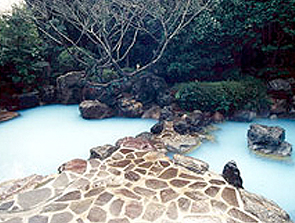
Taking a bath, rather than taking a shower, is very popular in Japan and public bathing is an important part of the Japanese culture. In Japan, there are two purposes to taking a bath: cleaning your body and relaxing your body.
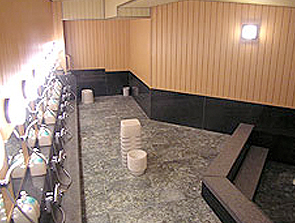
The first step is cleaning your body and this is done outside of the bathtub. Bathers sit on stools and wash their bodies using an attached shower head and hose.
Once you have finished rinsing off all soap and shampoo, step into the bathtub for a nice, relaxing soak. The bathtub can be very hot at times so you may not want to stay in for very long. You can go in and out of the bath as many times as you like. Although many people are used to taking showers in the morning to clean their bodies, it is a wonderful feeling to soak in a nice hot bath and relax your muscles at the end of the day.
Take off all your clothes (or your yukata if you wore it to the baths) and put them away with your drying towel.
When you leave the changing room and go into the bathing area, go straight toward the area with the row of stools, mirrors, showerheads, and water taps. Sit on one of the stools and rinse your body with water from the taps and the showerheads. You can also use the soap, shampoo, and conditioner that may be provided. There are washbowls you can use to douse your body with water.
Bathers in public baths and hot spring baths are naked; swimsuits are not allowed. Instead, bathers bring small towels that are used to cover their private areas when outside of the baths. When inside the bath, you should keep these towels out of the water (you can put them on the edge of the bath or on your head). Japanese Bath at Kannawaen
Once your body is clean and all soap and shampoo is rinsed off, you are ready to enter the bath. Before stepping into the water, it is a good idea to test the temperature with your foot so you have some idea of the water temperature. Some hot spring water can be very hot! Enter the bath slowly and try to move as little as possible (the more you move, the more the hot spring water is stirred and the hotter the bath gets).
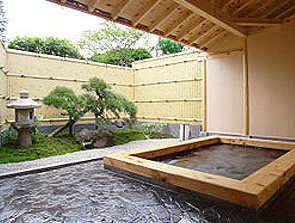
As with any Japanese bath, you are free to enter and exit the bath as many times as you like as long as you wash your body and hair first. Sometimes there are outdoor baths and you are free to use these as well.
If you are bathing in hot spring water, at the end of the bath it is best not to rinse your body with tap water – the minerals in hot spring water are often beneficial, and washing them off will stop them from taking full effect.
Please avoid horseplay and making loud noises in public or hot spring baths, as the atmosphere is supposed to be one for relaxation and quiet conversation.
If you get confused about what to do, just watch and try to mimic what everyone else is doing. It is a truly unique, Japanese experience, and sometimes the best way to learn is to imitate.